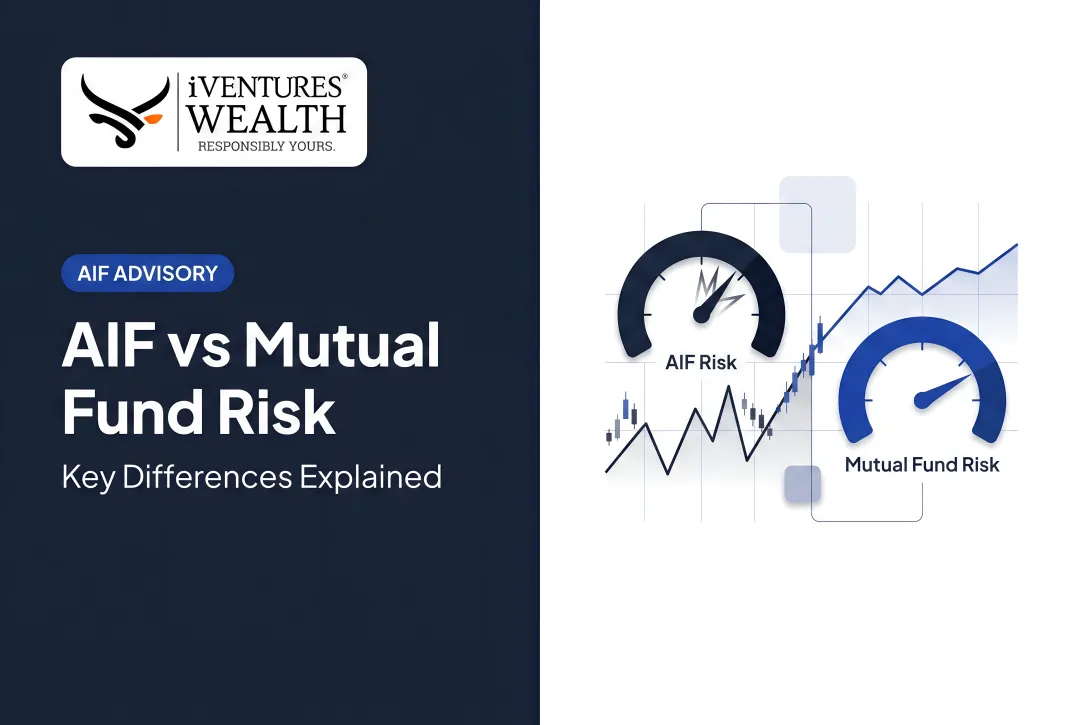
That growth is not proof of manager quality. It's just more capital chasing a product category with a materially different risk profile than public markets — lower liquidity, higher fees, and lighter day-to-day oversight.
Here's the part investors often miss: most AIF losses don't come from the asset class itself. They come from avoidable mistakes — skipped due diligence, liquidity mismatches, and no ongoing monitoring after the cheque is signed. This guide breaks down those mistakes, the warning signs that follow, and a practical framework to manage AIF risk properly.
Key Takeaways
- AIFs carry structurally higher risk than mutual funds via illiquidity, Category III leverage, and lighter regulation
- Four errors cause most AIF losses: skipped due diligence, lock-in mismatches, fee blindness, and over-concentration
- Delayed reporting, style drift, and rising redemptions signal risks demanding quick action
- Ongoing due diligence and monitoring, ideally led by a SEBI-registered fiduciary advisor, reduces AIF-specific risk
Common Mistakes That Increase AIF Risk
AIF risk rarely shows up out of nowhere. It compounds from a small set of recurring investor errors, and the same four mistakes show up across Category I, II, and III funds regardless of strategy.
Mistake 1: Skipping Fund Manager Due Diligence
Investors frequently commit capital based on brand recall or a headline three-year return, without ever checking the manager's track record across a full market cycle, team stability, or process discipline.
A typical scenario: an investor writes a ₹1 crore+ cheque into a Category III fund purely on a referral, without reviewing the manager's compliance test reports, historical drawdowns, or how the strategy performed in 2020 or 2022. By the time performance disappoints, the due diligence that should have happened at entry never took place at all.
Mistake 2: Ignoring the Lock-In and Liquidity Mismatch
Category I and II AIFs are close-ended with a minimum three-year statutory tenure, though market practice often runs five to eight years. Category III can be open- or close-ended depending on structure. Investors regularly commit money they'll need for a near-term goal (a child's education, a property down payment, a business contingency) without mapping that against the fund's actual exit terms.
The common trigger is a life event: a medical emergency, a career transition, a sudden capital need. That's exactly when an investor discovers they can't exit before fund maturity, because the PPM's redemption and extension clauses were never read carefully at entry.
Mistake 3: Underestimating Fees and Cost Layers
AIF fee structures aren't a single number. Management fees, performance fees (carry), hurdle rates, and setup or operational charges all stack on top of each other, and each layer erodes gross returns.
Mint's 2025 reporting on AIF fee structures notes typical hurdle rates of 8–12% IRR before carry kicks in, with historical carry benchmarks around 20% of returns above the hurdle. Investors who compare only the headline return figure across two funds, without normalising for these differences, routinely misjudge which fund actually delivers better net-of-fee outcomes.
Mistake 4: Over-Concentration in a Single AIF or Category
Putting a disproportionate share of net worth into one fund, or one category, magnifies exposure to a single manager's judgment and a single strategy's downturn.
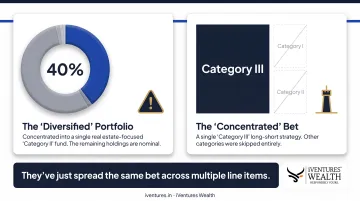
- An investor allocates 40% of investable assets to one real estate-focused Category II fund
- Another goes all-in on a single Category III long-short strategy, skipping Category I or II entirely
- Neither investor has genuine diversification. They've just spread the same bet across multiple line items
What Happens If These Risks Are Ignored
Unmanaged AIF risk doesn't stay theoretical for long. Four consequences tend to surface fast:
- Capital gets locked up right when a personal cash crunch hits
- Leverage-driven Category III strategies magnify losses faster than investors expect
- Fees quietly erode net returns nobody calculated at entry
- Missed regulatory or tax filings trigger compliance penalties investors didn't know applied to them
The grievance data backs this up. SEBI's FY2024-25 annual report recorded 120 investor complaints across Category I, II, and III AIFs (43 against Category I, 53 against Category II, and 24 against Category III) according to SEBI's Annual Report 2024-25. That's not a small number for a product category still built around sophisticated, high-ticket investors.
There's a structural angle too. SEBI's April 2024 framework now allows expired-tenure schemes with unsold assets to enter a dissolution period, requiring consent from 75% of investors by value, or move to in-specie distribution. In plain terms: some funds reach maturity without a clean exit, and investors end up holding illiquid residual assets instead of cash.
Warning Signs You're Exposed to Rising AIF Risk
Three patterns tend to show up before losses do:
- Reporting turns irregular: Fund manager updates become delayed, vague, or stop breaking down portfolio-level holdings the way they used to
- Style drift appears: The fund gradually deviates from its stated mandate. Regulation 9(2) actually requires two-thirds investor consent by value for material strategy changes, so drift itself is a governance red flag
- Redemption pressure builds: A spike in redemption requests, or a manager invoking extended suspension of redemptions, signals liquidity stress inside the fund
How to Manage AIF Risks Effectively
Managing AIF risk requires more than a one-time checklist you tick off before wiring the money. It's an ongoing discipline that runs through the entire life of the commitment.
Measure 1: Conduct Structured Due Diligence Before Committing Capital
Before signing anything, review the fund's PPM, SEBI compliance test reports, manager track record across at least one full market cycle, and governance structure. This is exactly where an independent, SEBI-registered investment adviser earns their fee — someone with no placement commission riding on the outcome has no incentive to wave you through.
At iVentures Wealth, this stage includes fund-house due diligence, vintage comparison across market cycles, fee and expense-ratio analysis, and GP track-record review before any AIF is shortlisted for a client.
Measure 2: Match Investment Horizon to Lock-In Period
Only allocate capital you genuinely won't need for the fund's full lock-in, typically 3 to 8+ years depending on category and structure. Segregate near-term liquidity needs from long-term AIF commitments at the financial planning stage, not after the money is already committed.
A practical approach: ring-fence 5–7 years of expenses in liquid, low-risk instruments first. Only allocate to illiquid alternatives like AIFs with what's genuinely left over.
Measure 3: Diversify Across AIF Categories and Managers
Spread commitments across Category I, II, and III, and across multiple fund managers within each, rather than concentrating in one strategy.
Category I: Early-stage and infrastructure exposure with longer horizons
Category II: Private equity, real estate, and debt strategies
Category III: Listed-market and derivative strategies with leverage capped at 2x NAV
Build this into portfolio construction from day one
Don't wait until one fund underperforms to suddenly discover diversification
Treat lot-sizing across AIFs as a deliberate decision, not an afterthought
Measure 4: Partner With a Fiduciary Advisor for Ongoing Monitoring
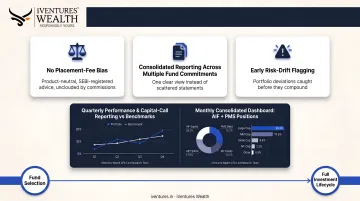
A product-neutral, SEBI-registered advisor can evaluate AIF options without a placement fee clouding the recommendation, consolidate reporting across multiple fund commitments, and flag risk drift early. iVentures Wealth's CFA-led research team, for instance, provides quarterly performance and capital-call reporting against benchmarks, alongside monthly consolidated dashboards covering AIF and PMS positions together.
Set this partnership up at the time of fund selection, and keep it running through the full investment lifecycle, not just at entry.
Tips for Long-Term AIF Risk Control
Beyond the initial prevention steps, a few ongoing habits keep AIF risk in check for years, not just quarters:
- Schedule annual portfolio reviews comparing each fund's performance against its category benchmark, not just against your expectations
- Keep a documentation trail of due diligence notes, PPMs, and compliance reports for every AIF commitment you make
- Use consolidated tracking tools to monitor exposure across multiple AIFs and asset classes in one place instead of piecing together separate statements
- Track SEBI regulatory changes — 2023 to 2025 alone brought new valuation standards, PPM audit formats, and investor due diligence rules that directly affect compliance obligations
Conclusion
AIF risk is largely identifiable and manageable. Investors just need to stop skipping due diligence, start matching lock-ins to real liquidity needs, account for full fee layers, and spread commitments across categories and managers.
The complexity doesn't disappear on its own, though. Partnering with an experienced, fiduciary-first advisor like iVentures Wealth gives investors a structured way to navigate that complexity, protecting capital over the full life of the commitment, not just at the point of entry.
Frequently Asked Questions
What are the risks of AIF?
AIF risks include illiquidity from multi-year lock-ins, leverage and market risk (especially in Category III), higher fee layers than mutual funds, evolving regulatory requirements, and manager-specific operational risk.
What is an AIF (Alternative Investment Fund)?
An AIF is a privately pooled investment vehicle regulated by SEBI under three categories (I, II, and III) that invests in non-traditional assets like private equity, venture capital, real estate, and hedge-style strategies.
What is the minimum investment and lock-in period for AIFs in India?
The SEBI-mandated minimum is ₹1 crore per investor (₹25 lakh for fund employees or directors). Category I and II require a minimum three-year close-ended tenure; market practice often extends to five or eight years.
How can investors reduce risk when investing in AIFs?
Reduce risk through structured due diligence, matching your investment horizon to the fund's lock-in, diversifying across categories and managers, and working with a fiduciary, SEBI-registered advisor for ongoing monitoring.
Are AIFs regulated in India?
Yes. AIFs are regulated by SEBI under the AIF Regulations, 2012, with compliance requirements (including leverage limits, valuation standards, and reporting) that differ by category.
Do all AIF categories carry the same level of risk?
No. Category III generally carries the highest risk due to permitted leverage and complex trading strategies, while Category I is comparatively more regulated and often carries incentives for early-stage or socially desirable sectors.